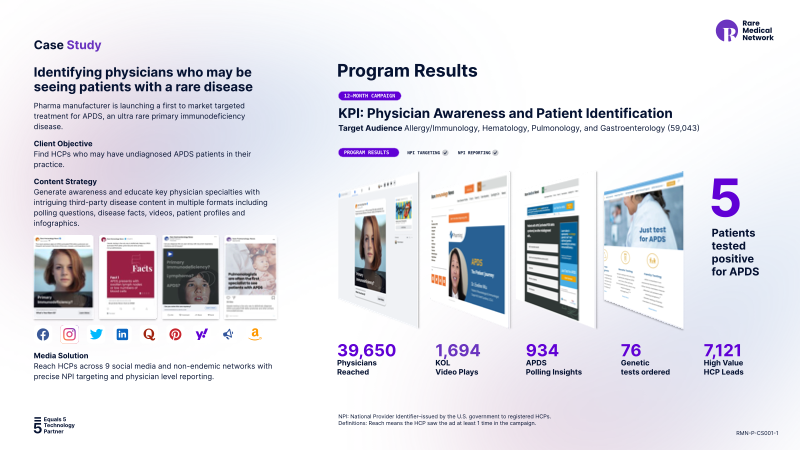
Driving Genetic Testing and Patient Identification in an Ultra-Rare Disease
A pharma manufacturer with a first-to-market targeted treatment for APDS, an ultra-rare primary immunodeficiency, needed to find HCPs who may have undiagnosed APDS patients in their care. Multiple content formats were deployed to generate awareness and educate key physician specialties.
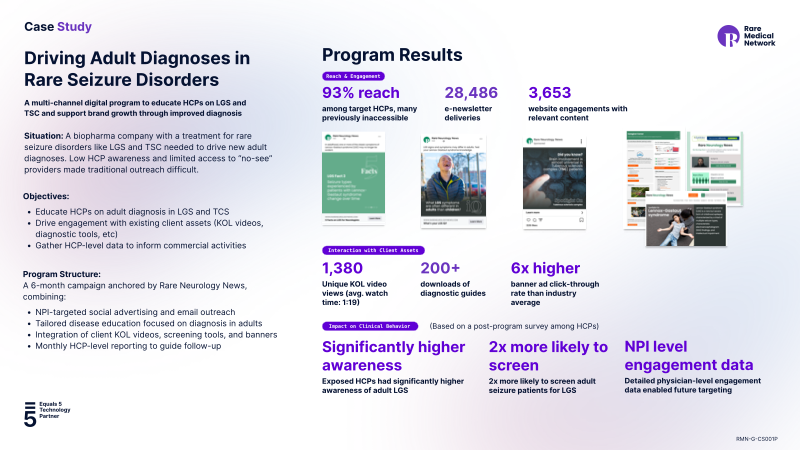
Increasing HCP Disease Awareness and Intent-To-Screen by 2X
A biopharma company developing treatment for rare seizure disorders like LGS and TSC sought to increase new adult diagnoses. The challenge: low HCP awareness and difficulty reaching “no-see” providers through conventional outreach. The initiative focused on educating HCPs about adult diagnosis recognition.
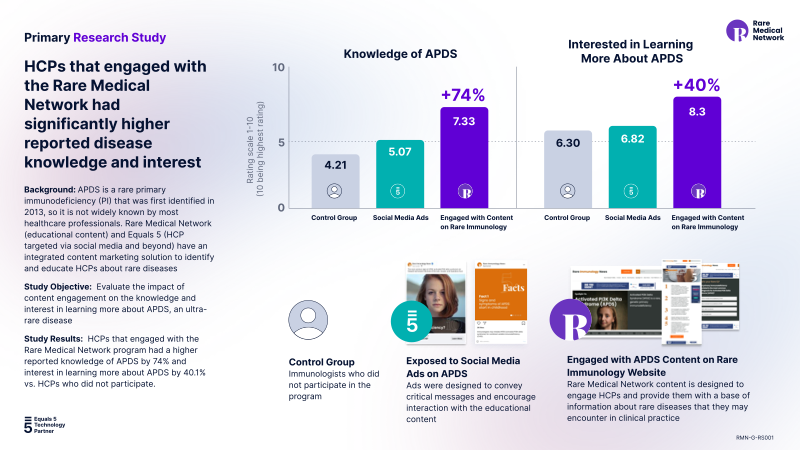
Boosting HCP Knowledge and Interest of a Rare Disease by 74%
APDS is a rare primary immunodeficiency first identified in 2013, making it unfamiliar to most HCPs. Rare Medical Network and Equals 5 collaborated on an integrated content marketing approach to identify and educate healthcare providers — measuring knowledge and interest impact.
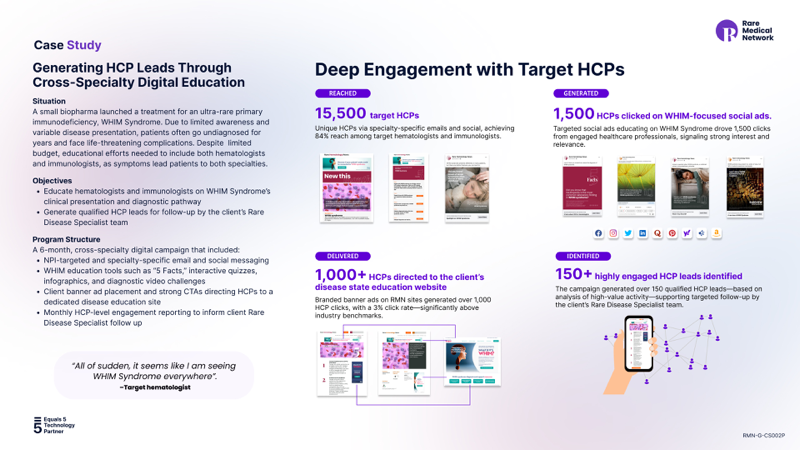
Generating HCP Leads Through Cross-Specialty Digital Education
A small biopharma launched a therapy for WHIM syndrome, an ultra-rare primary immunodeficiency. Because symptoms present to both hematologists and immunologists, both specialties needed education. With limited budgets, the company required an efficient way to identify and engage high-value HCP leads.