Adult Learning Theory
How adult learning principles apply to physician education in rare disease — and why traditional approaches fall short.
Best Practices in Rare Disease Commercialization
Strategies for launching and commercializing rare disease therapies — from market access to physician engagement.
Content Marketing for Rare Diseases
Why content marketing in rare disease requires a fundamentally different approach — and how to get it right.
The Education Gap
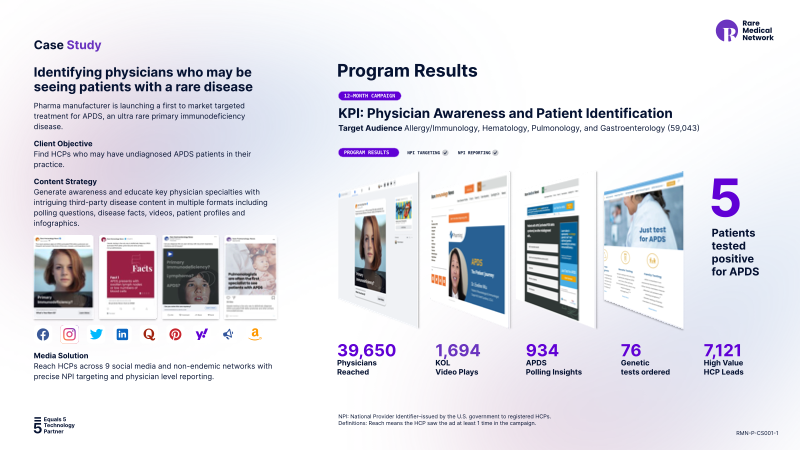
The gap between rare disease awareness and physician readiness — and what it means for patients waiting on a diagnosis.
Genetic Testing
The role of genetic testing in rare disease diagnosis — and how physician education can accelerate the path to testing.
Interactive Education
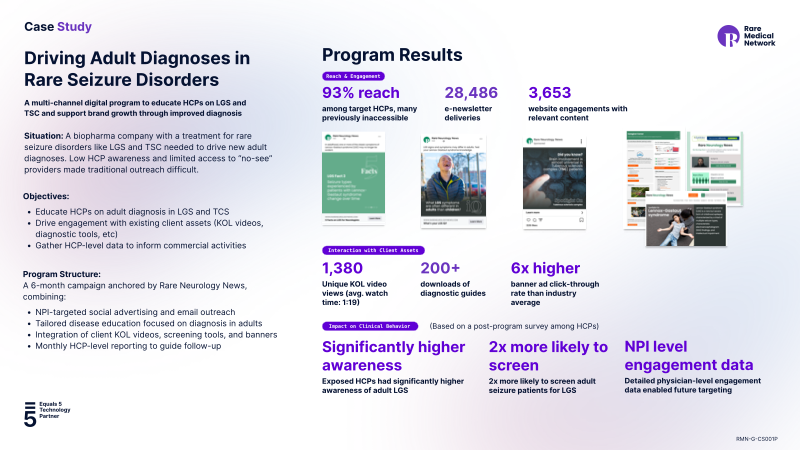
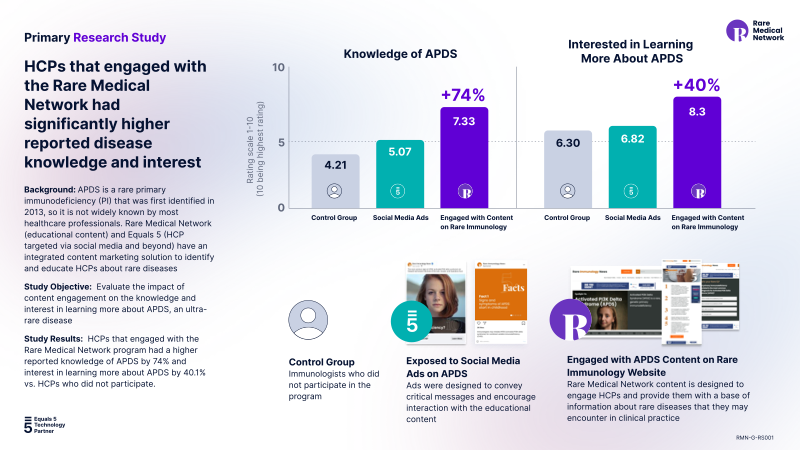
Why interactive content formats outperform passive education in rare disease — and the data to prove it.
Nothing About Us Without Us
Patient advocacy and the role of lived experience in shaping rare disease education and research priorities.
Personal Experience
How personal connections to rare disease shape better physician education — and why it matters for patient outcomes.
Raising the Baseline
Elevating the baseline of physician knowledge in rare disease — why incremental education compounds into clinical readiness.